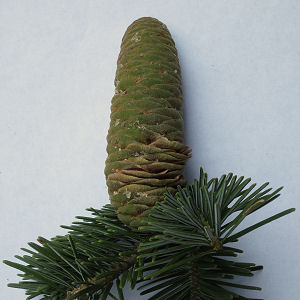
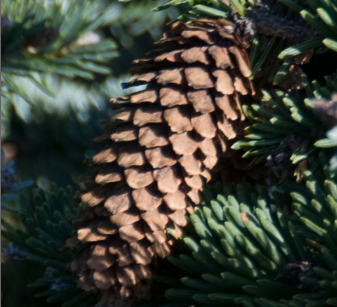
This is a blog about the native conifers of the Pacific Northwest. It is a companion to the Northwest Conifers site. The blog will focus on timely and interesting details about our conifers, their connections to the rest of the environment, and our connection to them.

Sunday, August 20, 2023

The Giant Giant Sequoias of Washington County

Why are there so many large giant sequoias in Washington County? Clearly, these California natives didn’t grow here naturally. To solve this mystery, we will have to look back to the migration of European settlers to Oregon in the nineteenth century. John Porter was one of those immigrants. He came with his parents in 1847 and they established a farm north of Forest Grove. However, when young John heard about the California gold rush, he was off to California to make his fortune. As the saying goes, that didn’t pan out, but while traveling through the Sierra Mountains, he encountered some enormous trees. They were giant sequoias (Sequoiadendron giganteum). These trees are the largest single-stem trees in the world and among the oldest, living up to 3,000 years. It is no surprise that he was so awed by their size and beauty that he collected a large number of cones and brought them back to the farm in Oregon. He began planting the sequoia seeds that he brought back and growing giant sequoia seedlings. He started a nursery and featured the giant sequoias along with other plants. John Porter is responsible for most of the large giant sequoias now growing in Washington County, some of them now over 150 feet tall and over 150 years old. Here are a few notable ones.

Porter Road Sequoias


View on Google Maps

No doubt Porter Road was named after John Porter. He planted two rows of giant sequoias on the west side of the road on what must have been the location of his nursery south of Verboort. These sequoias are like a dense linear forest that stretches some 500 feet to the west. They are impressive not just for the immense size of each one, but for their number and extent as well. They are a living monument to his contribution to Washington County. It would be fitting if a large mansion stood at the west end of the trees. To find these trees, drive north from Forest Grove on Highway 47 and turn right on Porter Road. (Note: Porter Road is closed for the construction of a roundabout at Highway 47 until Sept. 30, 2023.)


Visitation Church Sequoias 


The community of Verboort is less than a mile north of the Porter Road sequoias. In 1883, John Porter gave the Visitation Church at Verboort several young giant sequoias. They were planted all around the new church building that was built that year. Fire destroyed the church in 1941 but the sequoias survived, and a new church was completed at the site in 1949. The giant sequoias have grown to be great trees that dwarf the church. The smaller giant sequoias growing near the church were planted in 1974.

Governor Withycombe Sequoia 


James Withycombe was the governor of Oregon from 1914 to 1919. He came to Oregon with his parents in 1871 when he was 17 years old. He purchased a farm south of Hillsboro in 1873 and married Isabel Carpenter on June 5, 1875. He planted this giant sequoia on their wedding day. You can see it growing 3 miles south of Hillsboro on the east side of Highway 219. Note the large limb on the west side that has been growing vertically and is vying to become the leader.

Pacific Avenue Sequoia


This massive giant sequoia is one for the record book. It is often listed as the largest giant sequoia in Oregon and is a State Heritage Tree. It is located at the corner of Pacific Avenue and B Street in Forest Grove. As you drive west through town on Pacific Avenue, you can see it looming over the city from several blocks away. It is one of over 100 giant sequoias towering over Forest Grove.

Hawthorne Street Sequoias 


Three large giant sequoias are growing in the front yard of the Historic Hinman House at 1651 Hawthorne St. in Forest Grove. One of them rivals the size of the Pacific Avenue Sequoia and was listed as the Oregon State Champion giant sequoia by the Oregon Department of Forestry. A plaque by the door of the Hinman House shows a build date of 1876, and I suspect that the giant sequoias here were planted around then.

Courthouse Sequoias


It’s no doubt that these five giant sequoias in front of the Washington County Courthouse are the most celebrated sequoias in the County. They have a prominent location at the heart of Hillsboro at First and Main Street. They are best viewed from the south side of Main Street and tower over the Courthouse. However, they inspire the most awe when you stand underneath them and gaze up. John Porter planted these giant sequoias in 1880. They are another fitting memorial to the man who did so much to make Washington County the giant sequoia capital of Oregon.     


The giant sequoias growing in Washington County are awesome trees, but they are just children compared to many of their older relatives growing in California. Imagine how large our local giant sequoias will be 2000 years from now.

____________________________________________
See also

Grant's Getaways: Washington County's Land of the Giants

Historic Courthouse Sequoias A Monument To John R Porter

Monument Trees 

Giant Sequoias in NW Conifers


Monday, February 13, 2023

Favorite Things

Since I have a bit of a reputation for being a conifer geek, people sometimes ask me what my favorite tree is. Would you ask a mother which is her favorite child? With a similar attitude toward conifers, I can’t name a favorite. However, I do have some favorites among the different parts of trees. Here is my list of my favorite things about our local conifers.

Favorite Bark: Ponderosa Pine


Ponderosa pine bark is the clear winner, both for the striking golden color and the distinctive plates that appear to be covered with pieces of a jigsaw puzzle. The bark is more colorful on older trees, most notably on large trees growing east of the Cascades. Climate may also influence bark color. 

Favorite Needles: Noble Fir 


Firs have a reputation for well-ordered needles. Noble fir needles are the epitome of groomed order. They appear to be combed up and out from the twig. The curve where they attach to the twig is unique. The soft points are friendly and touchable. The color has a classy hint of blue. The red fir of California is similar to the noble fir. Where the two interbreed in southern Oregon, they are called Shasta red fir. 

Favorite Cones: Jeffrey Pine


The cones of the pines are larger than those of our other native conifers. The stiff, woody scales make them heavier and more substantive than those of other conifers. My favorite is the Jeffrey pinecone. Its woody scales and characteristic pinecone shape are similar to the ponderosa pinecone, but Jeffrey pinecones are notably larger than those of the ponderosa. The long prickles on the scales are usually bent back so you can safely pick up the cone. It is fascinating how the scales on pinecones grow in rows arranged in spirals. Jeffrey pine has 13 rows that spiral to the left. You can see 8 rows that spiral to the right. Both of these numbers are Fibonacci numbers. You can see this pattern on ponderosa cones as well. The next time you see a cone under a ponderosa, pick it up and check this out. Nature often develops growth patterns that are mathematically interesting.

Favorite Pollen Cones: Ponderosa Pine


Most pollen cones are hidden on the lower side of twigs. The pollen cones of ponderosa pines are prominently visible at the ends of branches. They are large, colorful and arranged like the petals of a flower. How could anyone not love them? 

Favorite Smell: Incense Cedar


If you have ever smelled the wood of Alaska cedar, you will forever be able to identify it by that smell. But it’s not a pleasant smell. On the other hand, incense cedar has a wonderful smell, as you might guess from its name. A few years ago, I was walking up a trail in Yosemite National Park to Yosemite Falls and encountered a wonderfully sweet smell in the trees. A park ranger told me that the smell was from incense cedar trees. It’s no wonder that people willingly spend large sums of money to buy chests made of incense cedar.

Favorite Shape: Subalpine Fir

Conifers are defined by their seed cones. Think about the general shape of most conifers. It is also a cone. It is an attractive shape, of course, but the spire shaped subalpine fir is extraordinary, reaching like the Eiffel Tower into the sky. It is the ideal design for life at high altitudes where the snowfall is deep in winter. Subalpine fir keeps its limbs short so the weight of the snow doesn’t break them. This practical design is the essence of its beauty.


Favorite Fruit: Pacific Yew


We don’t expect conifers to have a fruit, and technically the little red berry-like arils on yews are cones. But the cones have just one scale that surrounds a single seed. The scale ripens to a plump, bell-shaped aril. These arils have a sweet flavor that birds love, which is how yew seeds are dispersed. However, the seeds inside are quite poisonous to humans. So I don’t love them for the taste but rather for their bright red color, a unique thing to see growing on a conifer.

Favorite Fall Color: Western Larch

Most conifers are evergreen. However, a few species go out in a blaze of golden glory in the fall. The only Oregon native to do so is the western larch. In early November, the needles turn golden. By the end of December, they have all fallen to the ground. In spring, new needles burst out, making another striking display, this time of bright green.


Favorite Non-conifer: Oregon White Oak


I do have a favorite tree among the non-conifers. It is the Oregon white oak. It has been a favorite since my childhood. A large oak stood in front of the house on our farm. The oak is a symbol of strength, and the lobed leaf pattern is an iconic symbol for all trees. Unlike most trees that drop their leaves in the fall, the oak holds onto its leaves through the winter, perhaps another measure of its strength and tenacity. Oak trees were the site of many important historical events. One of these is the Treaty Oak at The Dalles, Oregon. It commemorates the signing of the 1855 treaty between the United States and the Confederated Tribes of Warm Springs. Finally, oak trees seem to be on friendly terms with ponderosa pines. You can often see them growing together, for example, in pine-oak woods at the east end of the Columbia Gorge and at oak-savannah sites in the Willamette Valley.

____________
P.S.
Thinking about your favorite things can be very therapeutic. It's even better to notice the beauty around you when walking in the woods. You can make your own list of favorite things. You might even write a song about them.

Wednesday, February 1, 2023

Are Trees Intelligent?

Recently, I made a posting here on the dangers of personification in nature writing (here). Now I want to consider the tendency we have to ascribe intelligence to trees and other plants. 

Trees do some amazing things. For example, consider what some conifers do when they are in danger of dying from disease or an infestation of insects or fungi. They will direct all their energy into the production of a huge cone crop. What an amazing strategy! Who would have thought that a tree could develop such a strategy to ensure the survival of its offspring. Survival is the key word here, which curiously explains why these trees react in this way. Genetic variability produced some trees that do this when under stress. Trees that do this have a better chance of survival. What appears to be intelligent behavior is simple natural selection.


I’ve seen several accounts of how slime molds can do amazing things that suggest they can behave in an intelligent manner, (for example here). Suppose you construct a maze and place some slime mold in it. You give it some of its favorite food, oatmeal, and you place more oatmeal at the exit of the maze. As the slime mold grows, it will progress all through the maze. When it reaches the food, any slime mold in dead-end passages will stop growing. This looks like an amazing feat, and many popular descriptions characterize the slime mold as showing intelligence. However, scientists suggested the mechanisms that explain the behavior. Learning the mechanisms of how slime molds do what they do seems like learning how magicians do a trick. “Oh, that’s how you did it.” It takes the mystery out of it. It’s kind of a letdown, but we are no longer inclined to think that the slime mold is making intelligent choices. 


Suppose we construct a similar maze. But instead of slime mold, we will run water into the maze. The water will flow through the maze until it reaches the exit. No oatmeal needed. Like the slime mold, the water will stop flowing up the dead-end passages. However, in this case, we don’t think it is so amazing, because we understand the simple process of the flow of the water. It’s natural. In fact, water does this all the time in any landscape where it rains, for example, western Oregon. These mazes become streams and rivers. 

Tree roots grow much like slime mold. They branch out gathering nutrients. The roots that are successful will grow more than others. The same is true above ground. The branches that receive more light will grow more than others. No surprise here. This is just how we would expect trees to grow. 

It's a mystery when plants do surprising things that seem like intelligent behavior. Whenever scientists find something mysterious, they try to find an explanation for it. Once we understand the explanation, of course the behavior no longer seems mysterious. Once we’re in on the trick, we no longer think it’s magic. However, unlike learning a magic trick, this is not a letdown. Rather, as we gain a deeper understanding of how nature works, we experience even greater wonder. And once we understand the explanation for the phenomenon, it no longer seems surprising. In fact, we would be surprised if, for example, slime mold didn’t behave in the way that it does. When we understand the role of natural selection, it’s natural that trees put on a big cone crop when stressed. We would be surprised if they didn’t.

In many of these cases, what appears to be intelligent behavior is just that: appearance. It has a natural explanation. No intelligence needed. When we do the science to find the explanation, we have a richer understanding of nature.

We might say that what looks like intelligence would be better characterized as logic. But the logic is the logic of science. When we understand the processes and principles that are operating, it is, of course, logical that plants would act according to these principles.

Now you might say that all this assumes that we understand intelligence as a human attribute, something that requires a brain and higher levels of thinking and reasoning. As a matter of fact, the standard definition of intelligence refers to this very thing:

The ability to learn or understand from experience; ability to acquire and retain knowledge; mental ability. - Webster's New World College Dictionary

This may seem to be anthropomorphic, but it is our common understanding of intelligence. However, we recognize that many animals demonstrate a similar intelligence. They have demonstrated their ability to solve problems and learn from their experience of their environment. But why should we limit intelligence to animals? If plants can show what appears to be intelligent behavior, why not call that intelligence? After all, language is not static. As we learn more about plant behavior, we may come to see it as intelligent. 

It is true that we think of intelligence as a human attribute. That is normal since we are human. But I would say that it is a mistake to force this description onto trees and other plants. As when considering personification in nature writing, this kind of anthropomorphism may not be appropriate.

Let’s think about why we consider animals to be intelligent. It is just because when we learn more about animal behavior, we see that they reason, socialize, and perhaps even use language like humans. In other words, when we understand them, we see that they possess the same kind of intelligence as we have. It’s just that their lives are very different from ours and we don’t, for example, understand their language. On the other hand, this is not what we see when we learn more about plants. What we see is processes that do not require intelligence. In amazing ways, plants have evolved to adapt to their environment without the need for intelligence.

We make the same distinction about ourselves. We can describe processes that happen in our bodies that are necessary for survival. The processes of the cardiovascular system, endocrine system, lymphatic system. All these amazing processes are essential for human life. However, we would not say that they show intelligence on our part. We are not even conscious of these processes. Similar biological processes in trees do not indicate intelligence either. 

Finally, does calling plants intelligent add anything to our understanding? Does it suggest any new avenues of research or suggest to us any explanation of their behavior? I submit that it does not. We would do better to simply study the amazing processes that trees use to survive, thrive, and reproduce. 

In fantasy writing, trees act with human intentions and powers of action and thought. It is often delightful, but it is good to remember that it is fantasy. The use of similar anthropomorphisms has become popular in some recent nature writing. Writers seem to think that this gives us an elevated view of nature and fills us with respect and awe. However, learning the details about the life of trees should fill us with wonder and awe. It’s better to simply observe them as they are without imposing the story of our existence upon them.


Saturday, August 20, 2022

Conifer Cones

What is a conifer? A dictionary will tell you the obvious: A conifer is a tree or shrub bearing cones. There are always exceptions, but this definition will work in most cases. Conifers are easy to identify, but so many conifers look alike that it is often difficult to identify the different species. The cones can be a useful way to identify each species. Many conifers drop their cones on the ground after dispersing the seeds. Some keep them on the tree for an extended time.

Cones of common conifers in Northwest Oregon


Douglas fir
Note the unique three-pointed bracts protruding from the scales.

Western hemlock

Western red cedar

Ponderosa pine


Grand fir


Noble fir

Noble firs grow above 2000 feet elevation. The firs don't drop their cones after they disperse their seeds. They drop the scales and seeds at the same time. So you're not likely to see fir cones on the ground. However, you may see the scales on the ground in the fall. You can distinguish noble fir from other firs by the protruding bracts on the noble fir cone scales. Other firs have shorter bracts.

Noble fir cone scale and bract


Grand fir cone scale and tiny bract


At the coast...
Sitka spruce

Shore pine (lodgepole pine)

Questionable cones...

Millions of years before flowering plants started growing tempting fruits to entice animals to distribute their seeds, conifers developed the same ability by growing succulent cones. For example, the scales on juniper cones merge to form a fleshy berry-like cone that attracts birds. Many bird species happily eat the berries and distribute the seeds of the juniper. Millions and millions of years later one animal species disrupted this cooperative system by using these juniper "berries" to flavor gin.


Western juniper

Like juniper cones, Pacific yew cones don't look like cones at all. They have a single seed surrounded by a single sweet, fleshy scale. Also like juniper cones, birds distribute the seeds. Yew cones are usually called arils.

Pacific yew

Not a cone? Alder cones do look like tiny cones, but they are not conifers.

Red alder

Not a cone. This is what happens when tiny aphid-like insects (adelgids) attack new growth on a Sitka spruce

Sitka spruce gall

See also
For a more complete list of native conifer cones, see Conifer cones at Northwest Conifers


Thursday, July 28, 2022

Focus on Jeffrey Pine


You’re probably familiar with ponderosa pine. It is the iconic tree of the western U.S., easily recognized by its distinctive, puzzle-piece, orange bark. Its cones are also distinctive, egg shaped, 3 to 6 inches long, and notoriously armed with painful prickles. However, if you travel to southwest Oregon, you may find what looks like a ponderosa pine with cones that are twice the size of ponderosa cones. They may be as large as 10 inches long. Congratulations, you have just discovered a Jeffrey pine.


It's no surprise that Jeffrey pine is a relative of ponderosa pine. Except for the cone size they are often difficult to tell apart. The size isn’t the only difference in the cones. Both have sharp prickles on the scales, but the prickles on Jeffrey cones point inward when open, while Ponderosa prickles generally point outward, just waiting for an unsuspecting hiker to pick up the cone. This difference in prickle orientation has been noted by some as a telltale difference between the two with this mnemonic device: Prickly ponderosa, Gentle Jeffery. However, this is not a reliable distinction. The prickles on both trees are variable. But here’s a better distinction: 

The prickles on ponderosa are short and curved, while the prickles on Jeffery are longer and straight. Note that if you are impaled by a Jeffery prickle, you may find that your finger is trapped by the prickle and the scale below! It’s very painful and difficult to remove.

The cones open when ripe and drop the large, winged seeds. They aren’t likely to fly very far, but they are a favorite food of the Clark’s nutcracker, Steller’s jay, squirrels, and chipmunks. They will eat them or cache them for eating later. Not all cached seeds are needed or remembered, so seeds that are cached in the soil often become the next generation of Jeffrey pines.

Jeffrey pine grows throughout the Sierra Nevada Mountains of California. Like many conifer species that are native to California, the range of Jeffrey pine crosses the border to a few locations in southwest Oregon. For example, you can find them growing along Interstate 5 north of Grants Pass and along Highway 199 near Cave Junction.

Jeffrey pine often grows in nutrient-poor soils where other species cannot grow. Does this mean that it thrives in these conditions? Not so much, but it does better than competing species. Jeffrey pine is smaller than ponderosa pine, growing to 130 feet or more.

Jeffrey and Ponderosa Needles

Like ponderosa pine, Jeffrey pine has 3 needles per bundle. Ponderosa pine needles tend to be bunched at the ends of the branches. Jeffrey pine retains its needles longer than ponderosa pine, so they typically remain farther along the branch.


For example, note this curious branch on a ponderosa pine in my yard. It looks like it did well some years and the needles remain, while the needles are missing from other years.


Jeffrey pine bark

Jeffrey pine bark looks similar to ponderosa pine with flat plates shaped like the pieces of a jigsaw puzzle. But Jeffrey pine bark is brown rather than orange. However, the bark on ponderosa pine can also look very much like Jeffery pine bark, especially on ponderosas growing in the Willamette Valley.  The bark is variously described as smelling like vanilla, lemon, or pineapple. But ponderosa bark can smell like lemon, so smelling bark may not be a good way to identify them.

Ponderosa pine near Bend, OR --- Ponderosa pine near Portland

Jeffrey pine was named after Scottish botanist John Jeffrey, who discovered it in1852 growing in the Shasta Valley in California. Other common names: western yellow pine and bull pine.

The wood is similar to ponderosa pine, and both are marketed as ponderosa pine or yellow pine. Pine sap can be distilled to make turpentine, and ponderosa pine was used to make turpentine in the eighteenth century.* However, if you try to make turpentine from Jeffrey pine sap, the result is heptane, which is highly flammable and explosive.** Be forewarned. If you think you want to make your own turpentine, be sure you know how to identify these two species. The best way to identify Jeffrey pine is by the size of its larger cones. And the safest way to get your turpentine is from a paint store.

See also

NW Conifers

*The Gymnosperm Database

**OSHAreports 10 people injured or killed by explosions or fires since 1988.


Thursday, February 17, 2022

The Great Douglas Fir Migration


Thousands of years ago, people from Siberia migrated across the Bering Land Bridge, which connected Asia to North America. We don’t know if they were explorers looking for new land and opportunities, or if they were driven by famine or drought. They could have been escaping religious persecution like some of the Europeans who came to North America thousands of years later. In any case, it was an adventure, and the adventurers spread across all of North America and into South America.

Millions of years earlier, another migration crossed the Bering Land Bridge in the opposite direction. However, it wasn’t a migration of people. It was a migration of Douglas fir trees. The story of this migration starts in Mexico. The first Douglas fir originated in northern Mexico some 50 million years ago. Douglas fir is closely related to the larch, which evolved from the pines. Douglas fir either branched from the same pine ancestors or from the larch. In either case, the two took quite different forms, the larch becoming deciduous with bundles of needles, and Douglas fir growing evergreen needles that resemble those of the spruce and fir. 

Bigcone Douglas fir
After its departure from the larch, Douglas fir began a long journey north, with some of them branching off to southern California to enjoy a warmer climate. They became a separate species we now know as bigcone Douglas fir (scientific name: Pseudotsuga macrocarpa). As both the scientific name and the common name imply, they have larger cones than the Douglas fir of the Pacific Northwest, although the trees are much smaller. Meanwhile, the trees that continued their migration north became what we know as Douglas fir (Pseudotsuga menziesii). 

Now we must stop and face this question: How can trees migrate? Unlike the strange, magical trees that destroyed the Orcs in “Lord of the Rings,” trees in our world remain rooted in one spot their entire lives. Yes, but their winged seeds can travel! They are adapted to do just that. Let’s suppose that in 100 years a tree grows to be 100 feet tall and produces seeds that are blown a conservative 200 feet from the tree. Thus, the forest would move 200 feet in 100 years, or on average, 2 feet per year. At that rate, it would take about 2500 years for the trees to migrate one mile. It may seem impossible for this forest to migrate all the way to Oregon, until you consider that it had millions of years to complete the trip. At this rate of one mile every 2500 years, the offspring of these seemingly immovable trees could be growing in Portland in less than 3 million years. Not content to linger in Portland, they continued right up the Pacific Coast to Alaska and across the Bering Land Bridge and south into Asia

Before they migrated very far, they faced another difficulty that might have stopped them before they even made it to Portland. The problem is this: As they migrated farther north, the climate changed. With these changes in the climate, the trees must adapt to the new environment. Douglas fir adapted to many changing conditions in their journey north to Alaska and then south into Asia. The journey was not without its setbacks. For example, they encountered a changing climate and several ice ages. And they required the right conditions for their seeds to germinate and survive. Douglas fir seeds germinate best in a seed bed of bare soil. Finally, they may have been stopped by open ocean at the Bering Strait, but at least once the Bering Land Bridge formed and allowed them to cross into Asia. 

Douglas fir seeds with wings

As they moved south through eastern Asia, they adapted to the conditions in different locations, and developed into several new species, including one in Japan, one in Taiwan, and several in China:

  • Japanese Douglas fir (Pseudotsuga japonica), is limited to Japan. Like all of the Asian species of the genus, it is smaller than the Douglas fir of the Pacific Northwest, growing to 100 feet. The cones are also smaller, only 2 in. or less. This species grows only rarely on steep slopes up to 3600 feet elevation.
  • Formosan Douglas-fir, (Pseudotsuga wilsonia), grows mostly in Taiwan with a few locations in China. It is closely related to the Chinese species.
  • Several species of Douglas fir grow in China. Like the Japanese Douglas fir and Formosan Douglas fir, these species are smaller than those of North America and have smaller cones.

Many other conifers have taken similar migrations from North America to Asia across the Bering Land Bridge including some of the true firs (Abies genus), spruce, and pines. And remember the ancient relatives of the Douglas fir, the larch? I suspect the larches took a similar journey, not only migrating to Asia, but to Europe as well. Here in North America, it appears that while migrating north, they also made a right turn and migrated to the East Coast and all across Canada. Some remained in central Alaska.

More recently and closer to home, Douglas fir has been adapting to different conditions here in western North America. Most notably, they have migrated north and south as well as up slope and down slope, with changes to the climate. Cold weather and glacial ice forced them south many times in the past thousands of years. When it warmed and the ice melted, they were able to migrate north again. Note that the glacial till left by the retreating glaciers was the ideal seed bed for the germination of Douglas fir seeds. 

The Cascade Mountains have imposed an interesting split in the population of Douglas fir in the Pacific Northwest. As the saying goes in biology, “Absence makes the genes wander.”  Whenever the members of a species are separated by a barrier, they will develop genetic differences. And if the environment is different in the separate populations, we will be able to see these differences as they adapt to the different conditions. 

As everyone from Oregon and Washington knows, the climate west of the Cascades is mild and damp, well in truth, wet. On the other hand, east of the Cascades, it is dry and prone to temperature extremes and drought. As the separate populations of Douglas fir adapted to these different environments, they evolved into two distinct varieties, and we can now see the differences between them:

Coastal Douglas fir (Pseudotsuga menziesii var. menziesii) now grows in western Oregon and Washington from sea level up to 5000 feet. It also grows along the coast of British Columbia and in the coastal mountains and Sierras of California. This variety grows faster and taller but is less drought tolerant. The needles are green, and the bracts on the cones lie flat on the scales.

Rocky Mountain Douglas fir (Pseudotsuga menziesii var. glauca) grows between 2000 and 7000 feet from central Oregon to the northeast corners of Oregon and Washington, and up into Canada. It also grows throughout the Rocky Mountains up to elevations of 9700 feet, and up to 10,700 feet in Arizona and Mexico. The needles of this variety tend to be blue or gray compared to the coastal form. The bracts on the cones tend to protrude outward from the cones.


As the climate warms, we can expect Douglas fir to change as they try to adapt to new conditions. Or they may attempt to migrate to cooler locations, higher or northward. The problem they face is that the climate is changing quickly. Can the trees keep up? Trees do not adapt or move quickly. Some foresters and volunteers have tried to assist by planting seedlings in new locations where they can grow successfully. This may have some effect, but ultimately, we must stop doing the things that are causing climate change. Can we do that?

_________________

More  Info

Douglas-fir: The Genus Pseudotsuga, Denis P. Lavender and Richard K. Hermann. You can download the PDF here.

Intercontinental disjunctions between eastern Asia and western North America in vascular plants highlight the biogeographic importance of the Bering land bridge from late Cretaceous to Neogene by Jun Wen, Ze-Long Nie, and Stefanie M. Ickert-Bond. Journal of Systematics and Evolution 54:469–490.

See the following topics at The Gymnosperm Database by Chris Earl:

Pseudotsuga

Pseudotsuga menziesii

Pseudotsuga  menziesii subsp. menziesii 

Pseudotsuga menziesii subsp. glauca